Practice & group practice
Sound masking in the medical practice
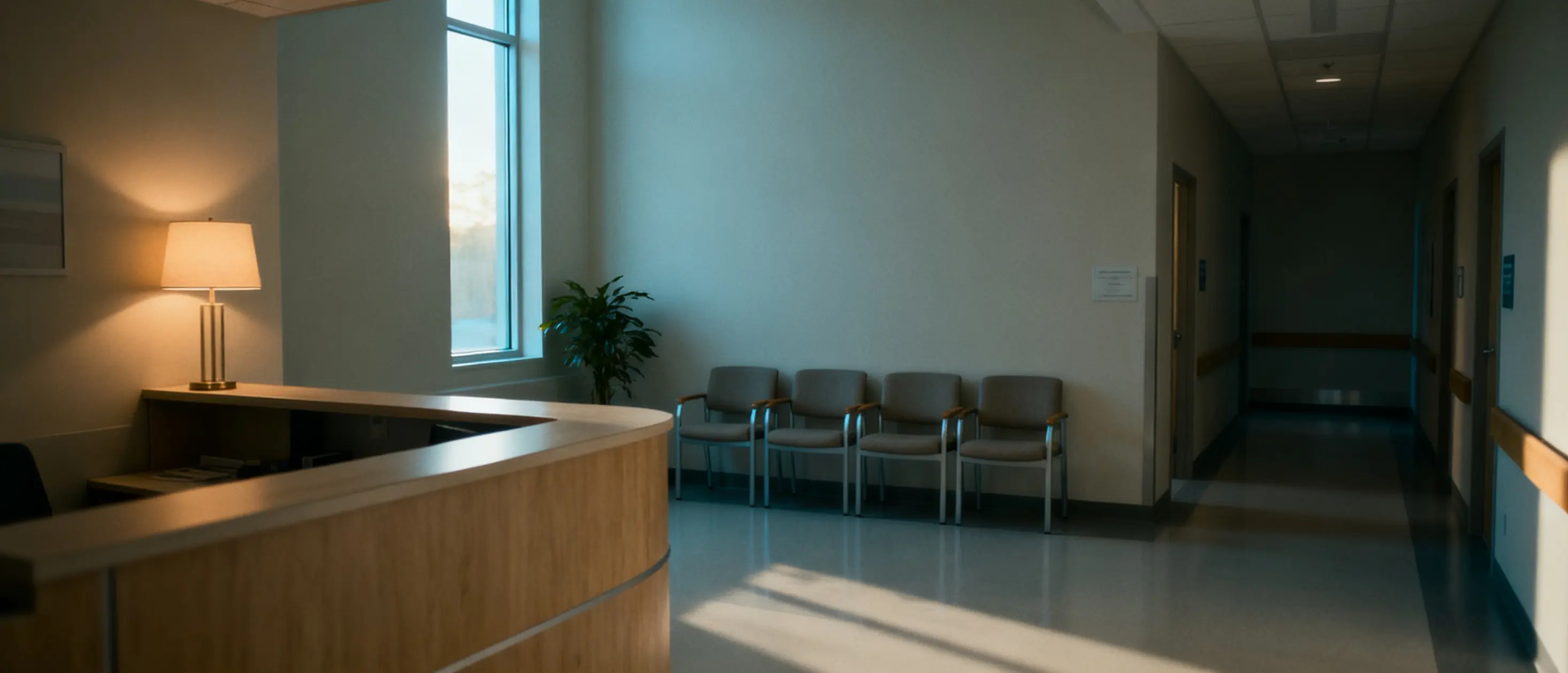
Reception and the waiting bench are rarely more than three metres apart. Whoever sits there learns in passing who has come in and why.
Flyer · Practice
The Quell flyer to leaf through – and as a print version to download.
Confidentiality does not stop at the desk.
The sequence is the same everywhere. Someone steps up to reception, gives a name, says what it is about. Maybe a result needs discussing, maybe it is a referral, maybe the assistant is on the phone to the lab right now. Six people on the bench listen in without wanting to.
For the practice this is not a question of manners. Medical confidentiality binds everyone on the staff, and health data falls under Article 9 GDPR as a special category of personal data with a raised level of protection.
In practice people improvise: whispering, printed slips, moving anything sensitive into the treatment room. It works, it costs time, and it makes the front desk impersonal. It also does not help when the phone rings.
From the practice
Patient data stays at the desk
What changes at the front desk
Names and diagnoses stop carrying to the bench
A device between reception and the waiting area takes the intelligibility out of exactly the distance people overhear across. Anyone standing at the desk still understands every word.
Nobody has to whisper
Older patients hear less well as it is. If the assistant lowers her voice, the follow-up question gets louder, and the waiting area ends up knowing more than before. A base sound in the room turns that around.
The waiting area gets calmer
An even sound bed takes the awkward silence out of a room, the kind where every cough stands out. Feedback from practices almost always runs this way: not quieter, but noticeably more relaxed.
No building work in existing rooms
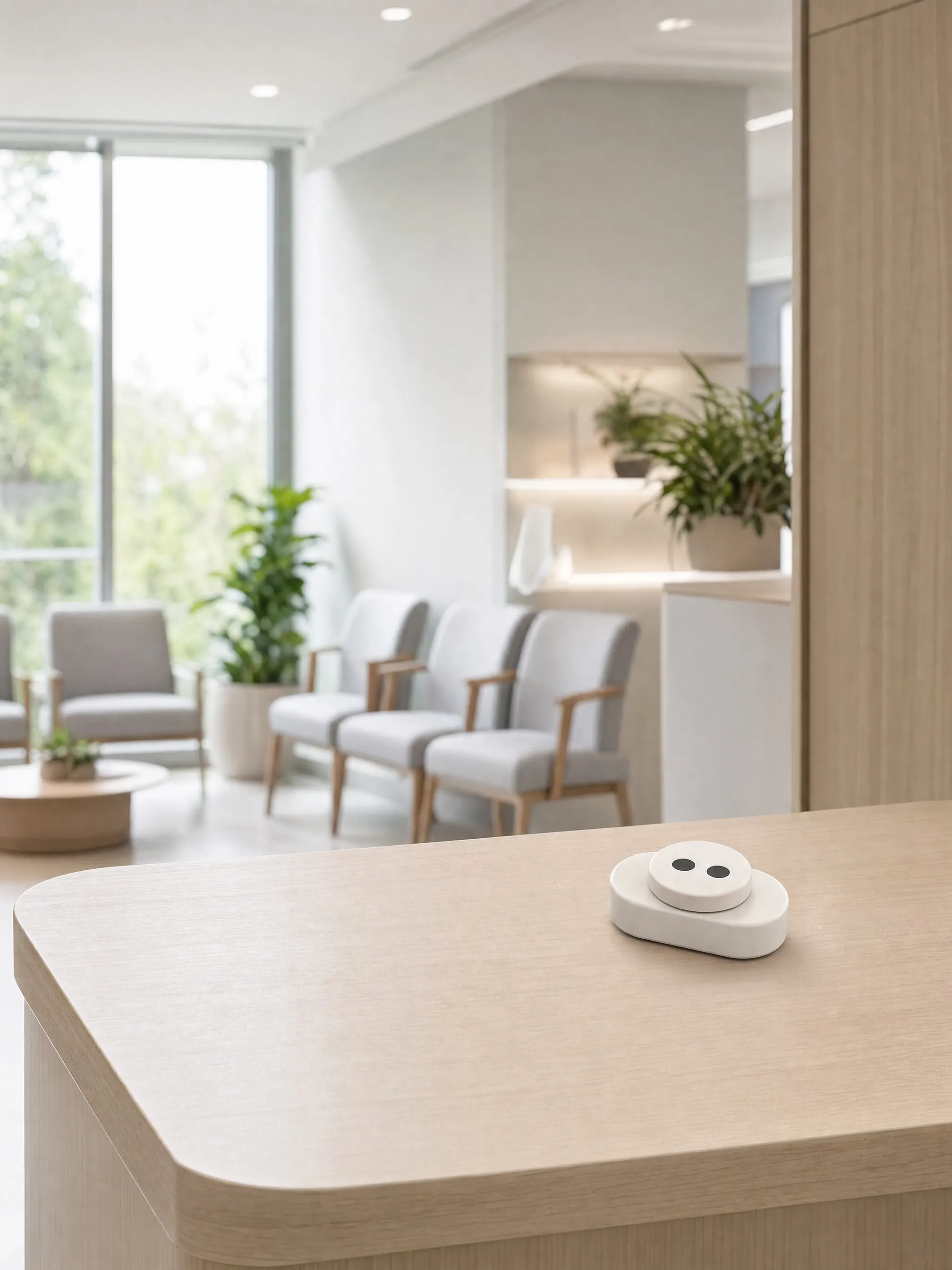
Practices often sit in period flats with stucco and high ceilings. There is nothing to mount and nothing to wire; the device stands on the counter or the cabinet behind it.
From the practice
The usual setup is one device at reception, aimed at the waiting zone. Group practices with a long corridor add a second one in the waiting area, because that is where patients talking among themselves start to pile up.
Practices are where people ask for a trial most often, and that is the right instinct. Two weeks in normal operation say more than any description, precisely because the staff start out sceptical.
Common questions
- Is this a problem for patients with hearing aids?
- It is the point we take most seriously. A hearing aid amplifies background sound along with everything else, so in practices the level is set deliberately conservatively, and the device at reception is aimed at the waiting area rather than at the counter. Nobody standing at the desk is worse off for it.
- Is one device enough for a whole practice?
- For a single practice where reception and waiting area share a room, usually yes. As soon as a corridor is involved, or the waiting area turns a corner, a second one becomes necessary. That cannot honestly be read off a floor plan, which is why we look at the room.
- Does it belong in the record of processing activities?
- The device itself processes no personal data. It measures the level in the room, records nothing and stores nothing, and the control loop runs entirely on the device without a cloud. As a technical measure under Article 32 GDPR it is worth documenting, and we provide a description for exactly that purpose.
Let us talk about your room.
Tell us where it is too open. You get an honest read on whether masking solves your problem, and if it does not, we will say so.
Talk to us